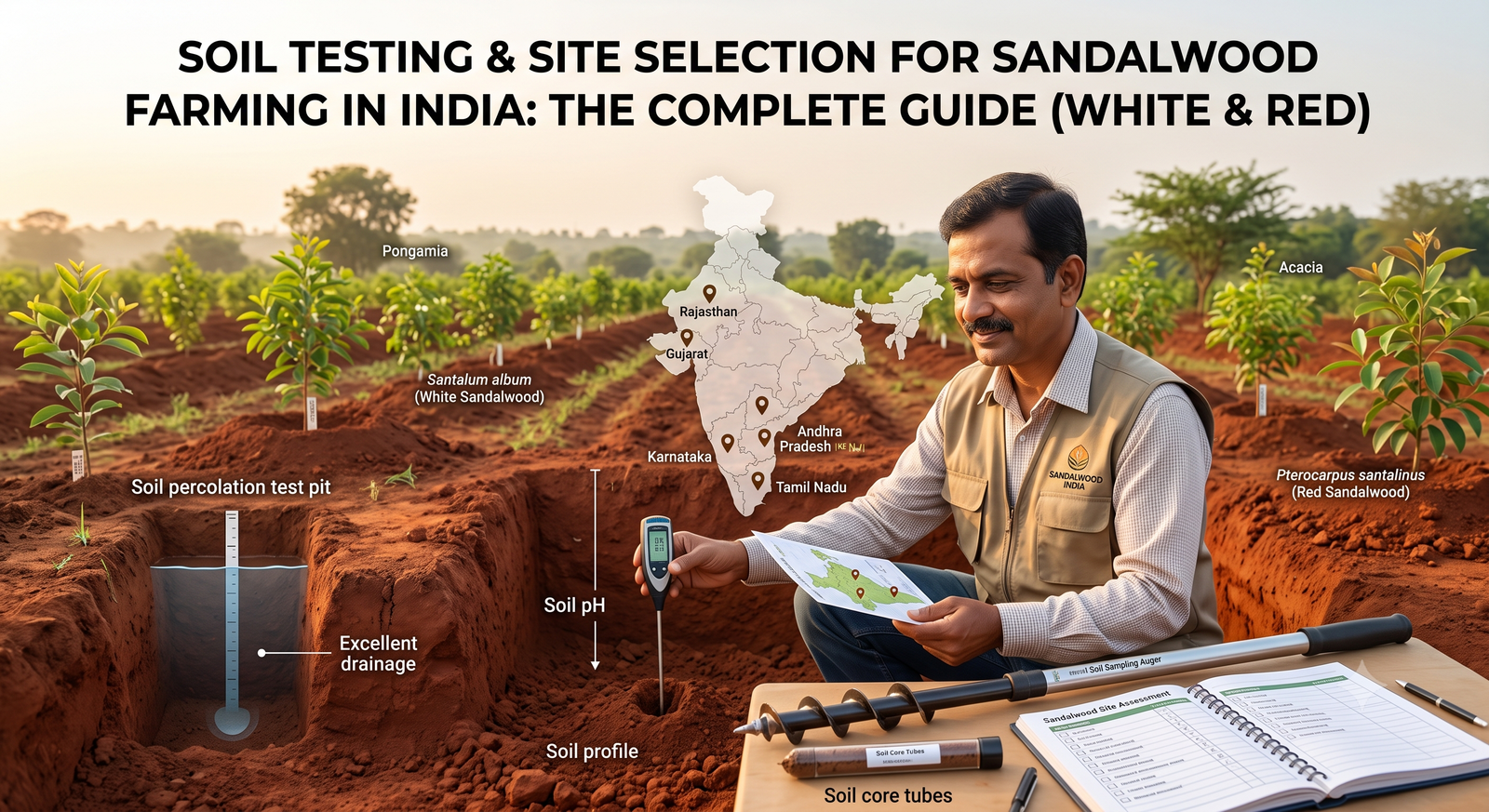
Quick Answer: For successful sandalwood farming in India, your land requires well-drained red laterite or sandy loam soil with a pH of 6.0 to 7.5. Sandalwood is highly sensitive to waterlogging, requires host plants for nutrient exchange (as a semi-root parasite), and thrives in semi-arid to sub-humid climates with 600–1600 mm of annual rainfall.
Before you plant a single sandalwood sapling, the biggest factor deciding whether your investment thrives for the next 12–15 years—or fails within the first two—is the ground beneath your feet. Soil testing and site selection aren't optional first steps; they are the foundation of a profitable, long-term sandalwood business across India.
At Sandalwood India, we get dozens of questions every week from prospective farmers in Gujarat, Rajasthan, Karnataka, Tamil Nadu, and beyond, asking: "Is my land suitable for sandalwood cultivation?" This guide explains exactly how to answer that question, scientifically and practically.
Why Soil Testing Matters for Sandalwood Cultivation:
Sandalwood (Santalum album — White Sandalwood, and Pterocarpus santalinus — Red Sandalwood) is an incredibly valuable but unforgiving crop. Unlike standard cash crops, sandalwood has unique biological requirements:
-
Long Maturation: It takes 12–15 years to mature for commercial heartwood harvesting.
- Semi-Root Parasite: It depends on host plants (via root connections called haustoria) for vital nutrient exchange.
- Waterlogging Intolerance: It is highly sensitive to standing water and poor drainage, which rapidly cause root rot.
- Precise Mineral Needs: It requires specific soil pH and mineral compositions to develop high-quality, oil-rich heartwood.
Getting the soil parameters wrong doesn't just reduce yield—it can mean losing your entire investment a decade into the growing cycle. Professional soil testing should always precede land purchase or plantation planning.
Ideal Soil Requirements for Sandalwood in India:
1. Soil Type:
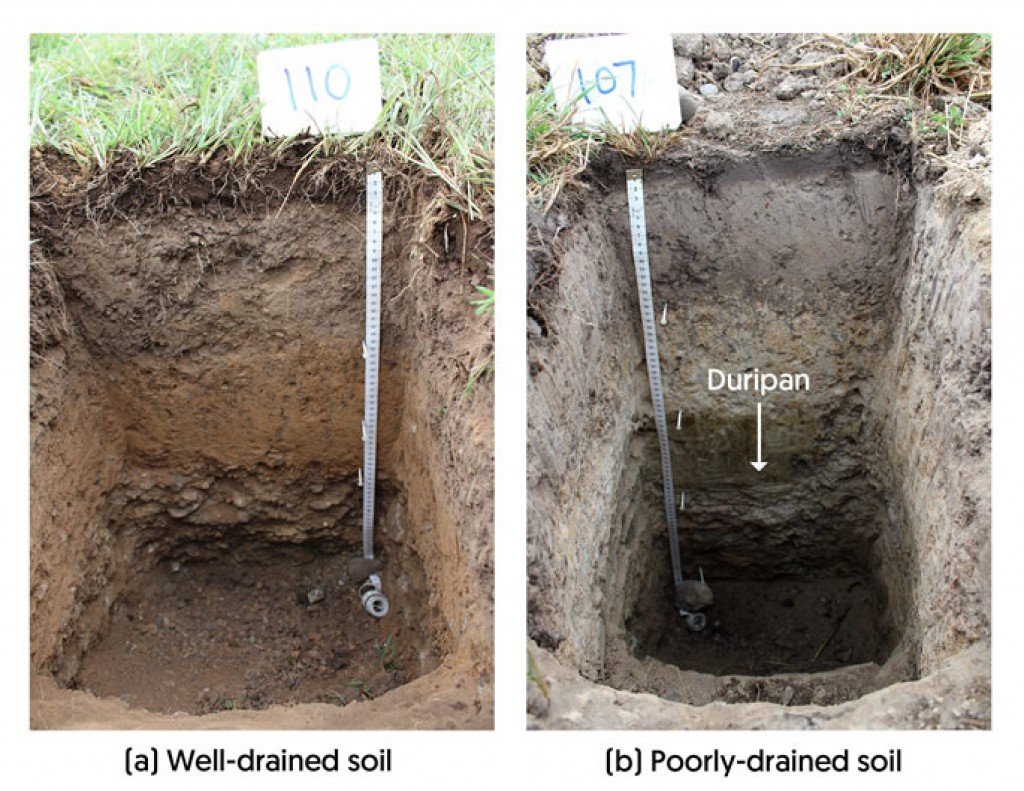
Sandalwood grows best in well-drained, red laterite, sandy loam, or gravelly soils. You must avoid heavy black cotton soil (regur) and clayey soils that retain excess moisture during the monsoons, as these promote fungal diseases and root rot.
2. Soil pH:
The ideal soil pH range for sandalwood cultivation is 6.0 to 7.5 (slightly acidic to neutral). Soils that are too alkaline or too acidic actively interfere with the tree's nutrient uptake and inhibit heartwood formation.
3. Drainage and Depth:
Excellent drainage is non-negotiable. A soil depth of at least 1 to 1.5 meters without a hard rock or clay pan layer is recommended, allowing the taproot to anchor deeply.
4. Organic Matter and Nutrients:
Moderate organic carbon content, along with adequate phosphorus and potassium, supports healthy early growth. Nitrogen-fixing host plants will largely compensate for the tree's ongoing nitrogen needs.
"Key insight: Even if your soil pH and climate are perfect, planting in clay or heavy black cotton soil will dramatically increase the likelihood of total crop failure due to monsoon waterlogging."
Step-by-Step Soil Testing Process:
To get an accurate reading of your land, follow this standardized testing procedure:
(Note: If you're unsure how to interpret your report, our team at Sandalwood India regularly helps farmers review lab results before they commit to planting.)
Site Selection: Beyond the Soil Report:
A complete site selection assessment must look beyond the dirt. Evaluate these environmental factors before planting:
-
Climate and Rainfall: Sandalwood thrives in semi-arid to sub-humid climates. 600–1600 mm of annual rainfall with a distinct dry season produces the highest quality heartwood.
-
Temperature: An optimal range of 12°C to 35°C supports healthy growth. Extreme frost or prolonged temperatures above 40°C will stress young saplings.
-
Altitude: It naturally grows best between 600–1000 meters above sea level, though proper site management has allowed successful cultivation at lower altitudes across parts of Gujarat and Maharashtra.
-
Host Plant Capacity: A site without room to integrate short-term hosts (like red gram or pigeon pea) and long-term hosts (like Pongamia, Acacia, or Casuarina) is not plantation-ready.
-
Topography: Gently sloping land is highly preferable over flat, low-lying areas. Slopes naturally shed excess water during heavy monsoons, reducing waterlogging risks.
Regulatory Clearances:
Land suitability is also legal. Sandalwood cultivation, felling, and transit are heavily governed by state-specific forest department regulations. You must verify local laws regarding transit permits before finalizing your commercial site layout.
Final Site Selection Checklist:
Use this table as your ultimate go/no-go checklist before purchasing land or beginning plantation operations:
| Factor | Ideal Condition |
| Soil Type | Red laterite, sandy loam, or gravelly |
| Soil pH | 6.0 – 7.5 pH |
| Drainage | Excellent (zero standing water/waterlogging) |
| Rainfall | 600 – 1600 mm/year |
| Temperature | 12°C – 45°C |
| Altitude | 600 – 1200 m (flexible with management) |
| Host Plants | Adequate spacing available for both primary and secondary hosts |
| Legal Clearance | Verified as per your specific State Forest Department rules |
Choosing the right land is the most critical decision in your sandalwood farming journey. Assess thoroughly, test professionally, and never compromise on drainage.
Get Expert Guidance Before You Plant:
Choosing the right land is the most important decision you'll make in your sandalwood farming journey — and it's not one to make alone. Our team at Sandalwood India helps farmers across Gujarat and beyond evaluate soil reports, assess site suitability, and plan plantations correctly from day one.
👉 Learn more about Sandalwood Farming: sandalwoodindia.com/farming
👉 Learn more about Sandalwood Farming Disease: sandalwoodindia.com/diseases
👉 Learn more about Sandalwood Farming Government Rules: sandalwoodindia.com/government
--------
Have questions about the rules in your state? Write to us at support@sandalwoodindia.com