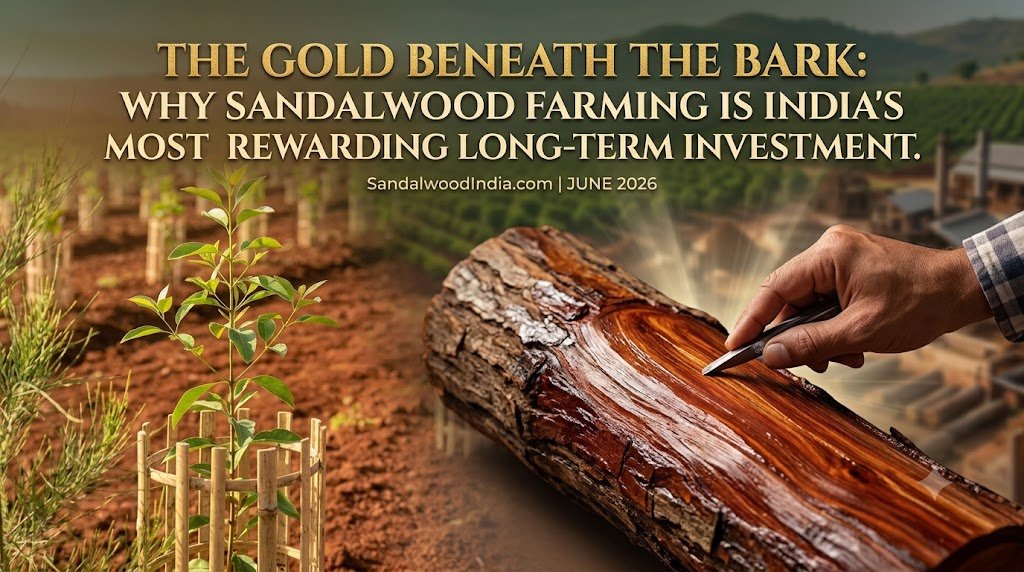
Sandalwood Farming in India: The Long-Term Investment Guide:
India has always held a special relationship with sandalwood. For over four thousand years, it has been woven into our rituals, our medicine, our art, and our identity. The cool, creamy fragrance of Santalum album — Indian sandalwood — is unlike anything else on earth. And today, that ancient tree is quietly becoming one of the most compelling agricultural investments in the country.
Welcome to SandalwoodIndia.com. This is our first post, and we want to start at the very beginning: what sandalwood farming is, why it matters, and why now is the right time to pay attention.
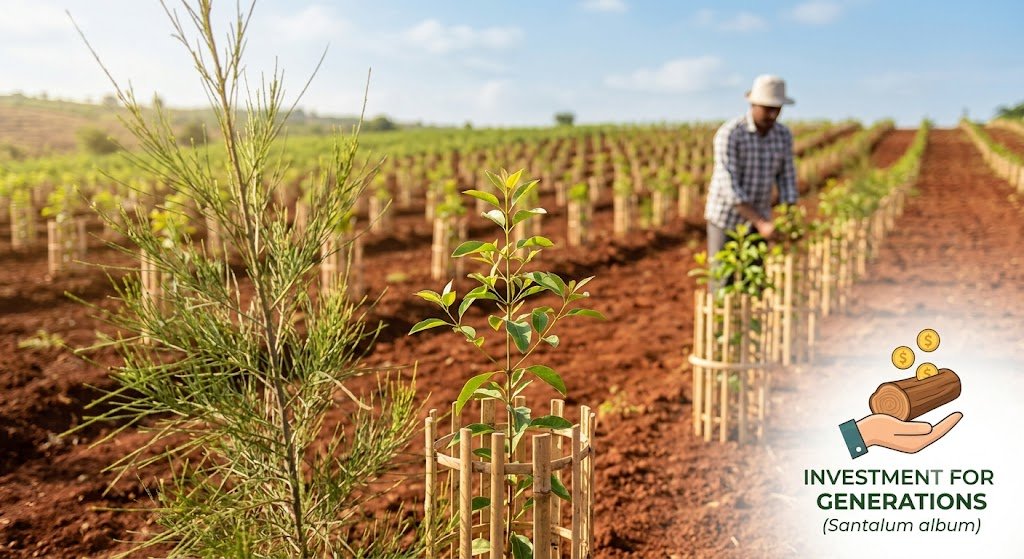
What Makes Indian Sandalwood So Valuable?
Santalum album, the species native to the Deccan Plateau, is not just any fragrant wood. It is the most expensive wood in the world by weight, currently trading between ₹10,000 and ₹15,000 per kilogram in the domestic market — and significantly more for heartwood of exceptional quality.
What drives this extraordinary value?
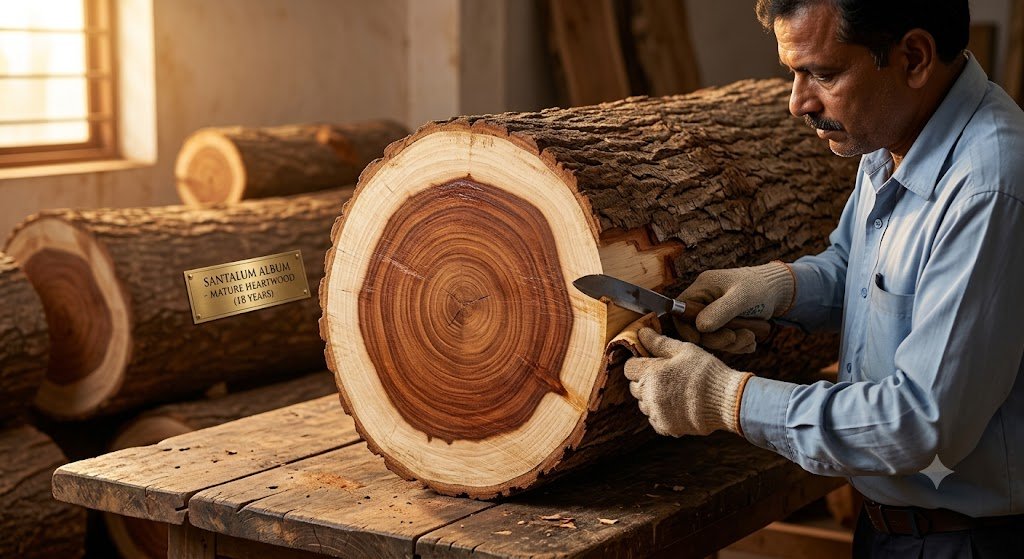
Scarcity. True Indian sandalwood takes 15–20 years to develop the dense, oil-rich heartwood that perfumers, cosmetic companies, and luxury goods manufacturers demand. There are no shortcuts. The tree's value literally grows with time.
Global demand. The worldwide sandalwood market is valued at over $1 billion USD and is growing steadily. Demand from the luxury fragrance industry, Ayurvedic and cosmetic sectors, and religious markets — particularly in East Asia and the Middle East — consistently outpaces supply.
Depleted natural forests. Decades of illegal felling and poor forest management have drastically reduced wild sandalwood populations. The Karnataka Forest Department has itself acknowledged that natural stocks are critically low. This supply gap has opened a significant opportunity for cultivated, legal sandalwood farming.
The Case for Sandalwood as an Investment:
When most people think of agricultural investment, they think of annual crops — wheat, rice, sugarcane. Sandalwood is fundamentally different. It is a long-gestation, high-reward investment, closer in structure to real estate or a fixed-return bond than to conventional farming.
Here is what the numbers look like at a broad level:
- A well-managed plantation of 400 trees per acre can yield 40–60 kg of heartwood per tree at maturity (18–20 years).
- At current market rates, a single mature tree can be worth ₹5–7 lakh.
- With companion cropping of vegetables, pulses, and medicinal plants in the early years, the land remains productive — and revenue-generating — throughout the waiting period.
The Indian government has also significantly reformed its sandalwood policies. Since 2002 in Andhra Pradesh and, progressively, in other states, private landowners have been legally permitted to grow, harvest, and sell sandalwood without the bureaucratic hurdles that previously made cultivation impractical. This policy shift was a turning point for the industry.
What Does Sandalwood Farming Actually Involve?
It is worth being clear-eyed about the commitment. Sandalwood farming is not passive. It requires:
The right host plants. Sandalwood is a hemiparasite — it derives a portion of its nutrients from the root systems of neighbouring plants called hosts. Choosing the correct host species (commonly Casuarina, Red Gram, or Pongamia) is one of the most important decisions a sandalwood farmer makes. Poor host selection is one of the leading causes of slow growth and disappointing yields.
Soil and climate conditions. The tree thrives in well-drained, red laterite or rocky soils with moderate rainfall (600–1000 mm annually). Regions of Karnataka, Andhra Pradesh, Telangana, Tamil Nadu, and parts of Rajasthan offer suitable conditions.
Pest and disease vigilance. Spike disease — caused by a phytoplasma pathogen — has historically devastated sandalwood populations. Modern cultivation practices and early detection protocols have made this manageable, but it requires ongoing attention.
Patience and long-term planning. This is, ultimately, an intergenerational asset for many farmers. Those who plant today may be planning as much for their children as for themselves.
Why We Started SandalwoodIndia.com
The information available to aspiring sandalwood farmers and investors in India is scattered, often outdated, and sometimes misleading. Promises of unrealistic returns circulate alongside genuine opportunity. We started this platform to cut through the noise.
Our goal is straightforward: to be the most reliable, practical, and honest source of information on sandalwood cultivation and investment in India.
Whether you are a farmer in any state of India considering converting a portion of your land, a professional investor looking at alternative assets, or simply someone curious about this ancient tree and its modern commercial story, this platform is for you.
The Bottom Line
Sandalwood is not a get-rich-quick scheme. It never has been. It is a slow, patient, deeply rewarding endeavour — much like the tree itself, which spends decades quietly building something extraordinarily valuable in its core.
India's soil, climate, and centuries of sandalwood expertise give the country a unique advantage in supplying a product the world will always want. The question is whether we will cultivate that advantage wisely.
We think the answer is yes. And we are here to help.
Have a question or want to share your experience with sandalwood farming? Write to us at support@sandalwoodindia.com